

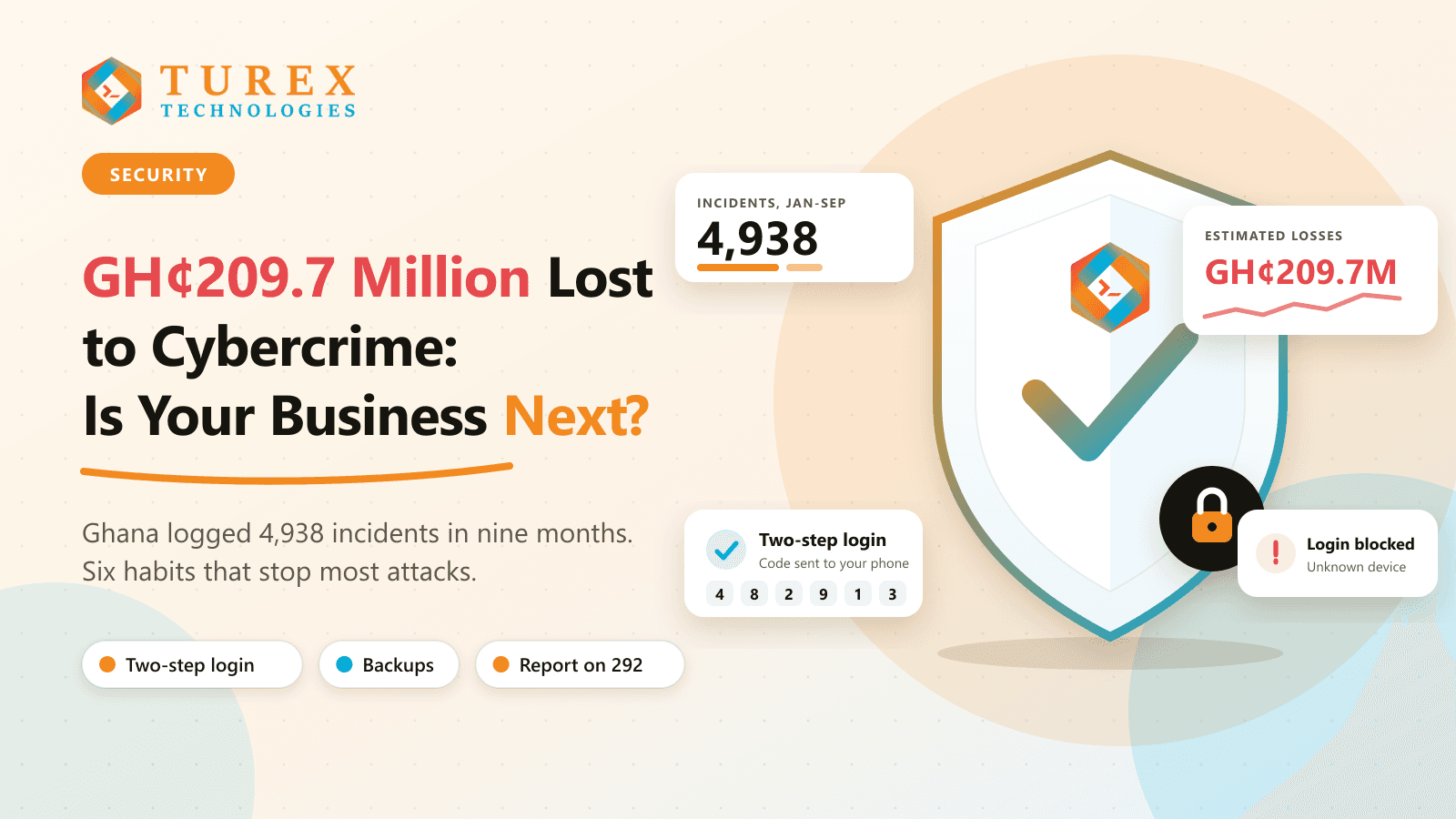

Numbers have a way of making a problem real. Here are two from this week: 4,938 and GH¢209.7 million. That is how many cybersecurity incidents Ghana recorded between January and September 2026, and the estimated money lost with them. The figures were shared by Deputy Minister for Communication, Digital Technology and Innovations Mohammed Adams Sukparu at the CyberSecure Ghana conference in Accra on 30 October.
If you run a shop, a school, a clinic or a startup, it is tempting to think these are stories about banks and telecom giants. They are not. Attackers go where the defences are thinnest, and a small business with a shared password and an out-of-date website is an easy target.
Why small businesses get hit
Three things come up again and again: passwords that are weak or reused, software that has not been updated, and nobody being clearly in charge of security. None of these needs a big budget to fix. They need a decision, and about ten minutes.
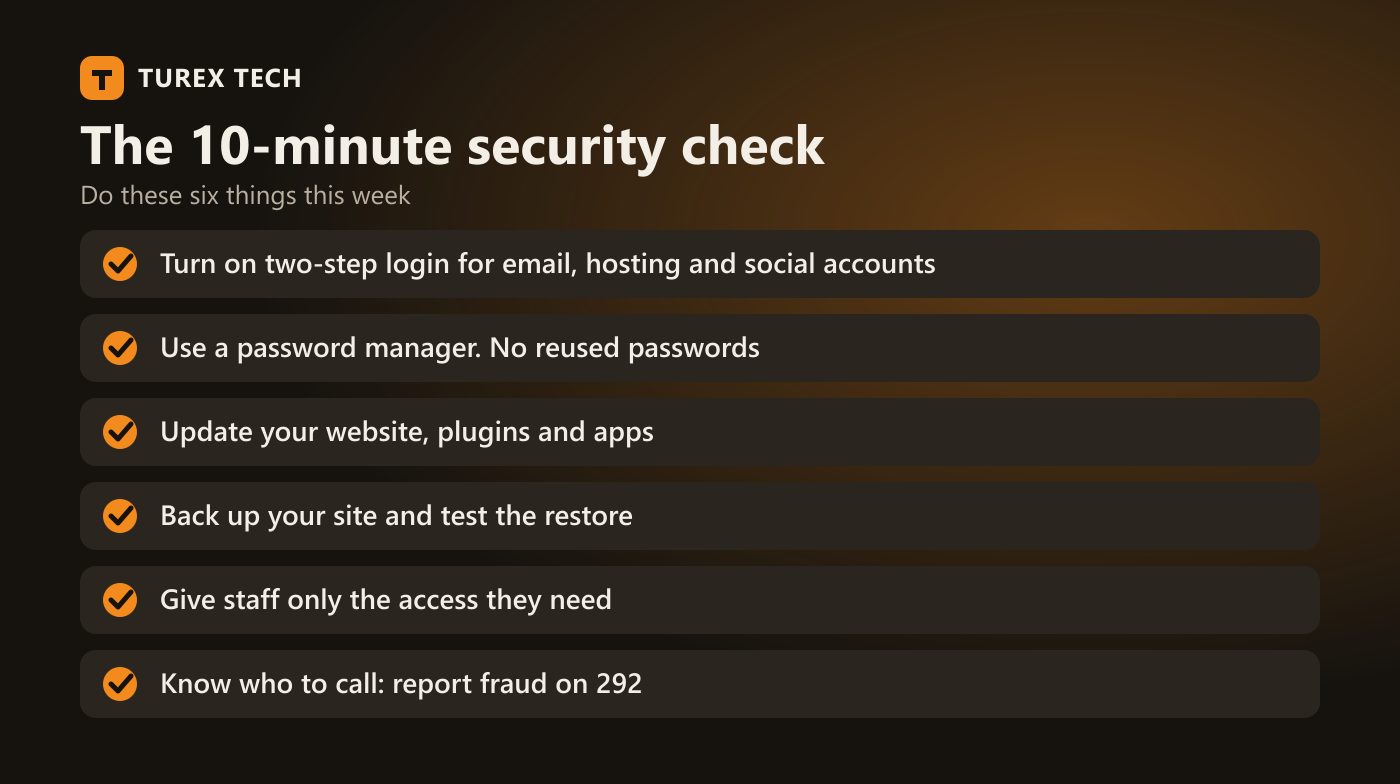 Six habits you can finish this week. Print it and tick them off.
The six habits, explained
1. Two-step login on everything that matters
Turn it on for your email first, then your hosting, domain, payment and social media accounts. If someone steals a password, the second step still keeps them out.
2. A password manager, and no reused passwords
One password that opens five accounts is five accounts lost at once. A password manager creates and remembers long, unique passwords for you.
3. Keep everything updated
Website platforms, plugins, phone apps and operating systems all receive security fixes. An update you keep postponing is a door left open.
4. Back up, then test the restore
A backup you have never restored is a hope, not a plan. Once a quarter, restore your site to a test copy and check it works.
5. Give people only the access they need
The intern does not need admin rights to your website. When someone leaves, remove their access the same day.
6. Know who to call
If you spot fraud or a suspicious message, report it to the Cyber Security Authority by dialling 292. Write the number where your team can see it.
You cannot outsource accountability
The Deputy Minister made a point worth remembering: you can outsource a service, but you cannot outsource responsibility for the risks it creates. If a developer, agency or software provider looks after your website, ask them plainly how they handle updates, backups, access and incident response. A good partner will answer in simple words.
Security is not a product you buy once. It is a few habits you keep.
Where we can help
At Turex Tech, every website we build ships with managed hosting, regular backups and security updates, so these habits are not left to chance. If you are not sure how safe your current site is, talk to us and we will walk through it with you. You can also see what our website packages include.